Port Blair Port: The Andaman Gateway
The Andaman and Nicobar Islands stretch across 836 islands, islets, and rocks in the Bay of Bengal and the Andaman Sea. Of those, only 31 are inhabited. And at the center of all of it, commercially, logistically, administratively, sits Port Blair Port.
For anyone operating in the maritime space in this region, Port Blair is not just a port. It is the single most critical node that connects these islands to mainland India, to international shipping lanes, and to the broader Indo-Pacific maritime economy. Understanding how this port works, what makes it unique, and where it is headed is essential knowledge for every vessel owner, shipping agent, offshore operator, and logistics professional working in these waters.
A Natural Harbor With a Long History
Port Blair's harbor is natural, a geographic advantage that has shaped the city's role as a maritime hub for centuries. The port sits on South Andaman Island, positioned between the Bay of Bengal to the west and the Andaman Sea to the east. It lies approximately 1,190 km from Chennai and 1,255 km from Kolkata, placing it squarely at the intersection of Indian Ocean trade routes that connect South Asia to Southeast Asia.
Port Infrastructure: The Three Wharfs
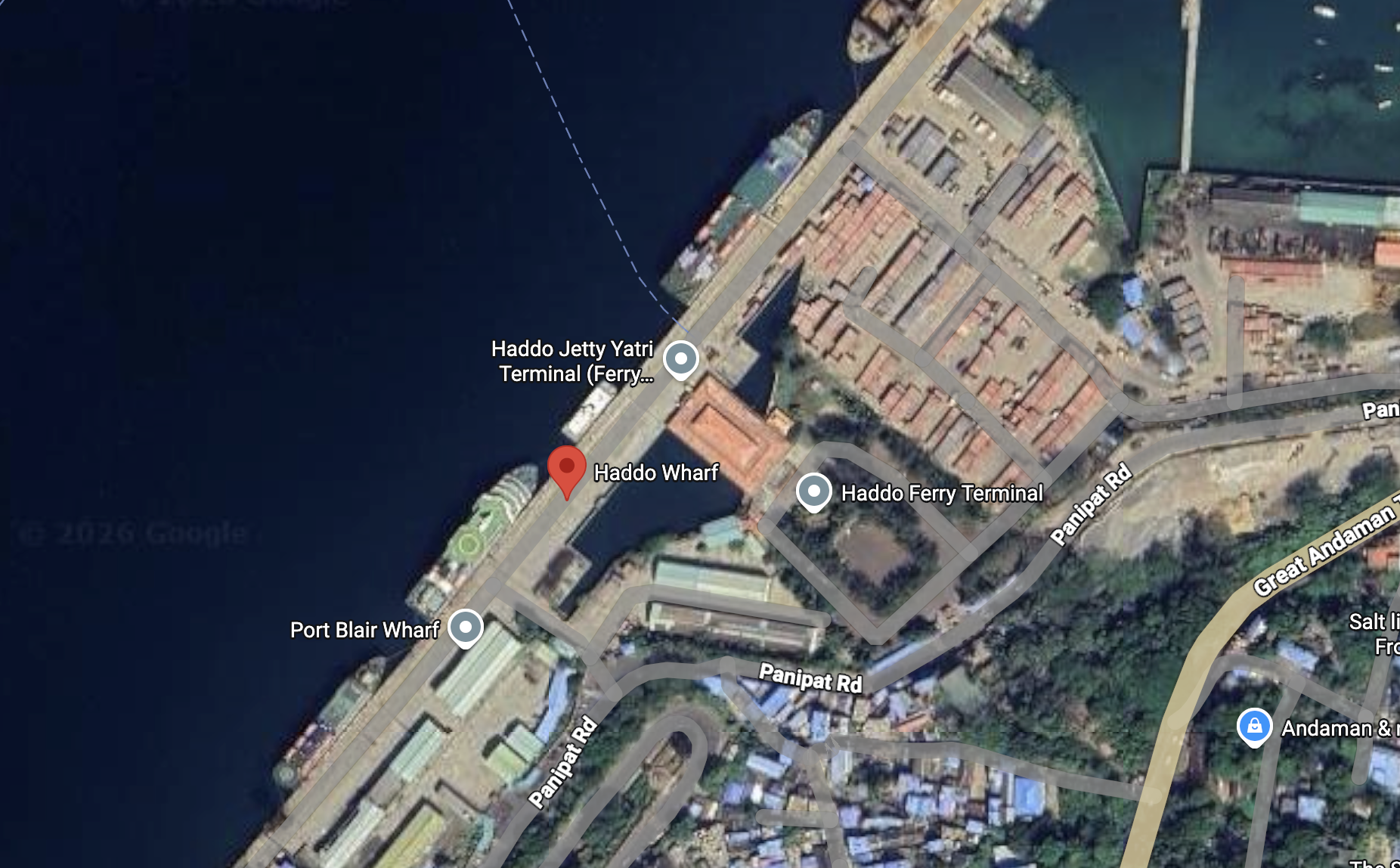
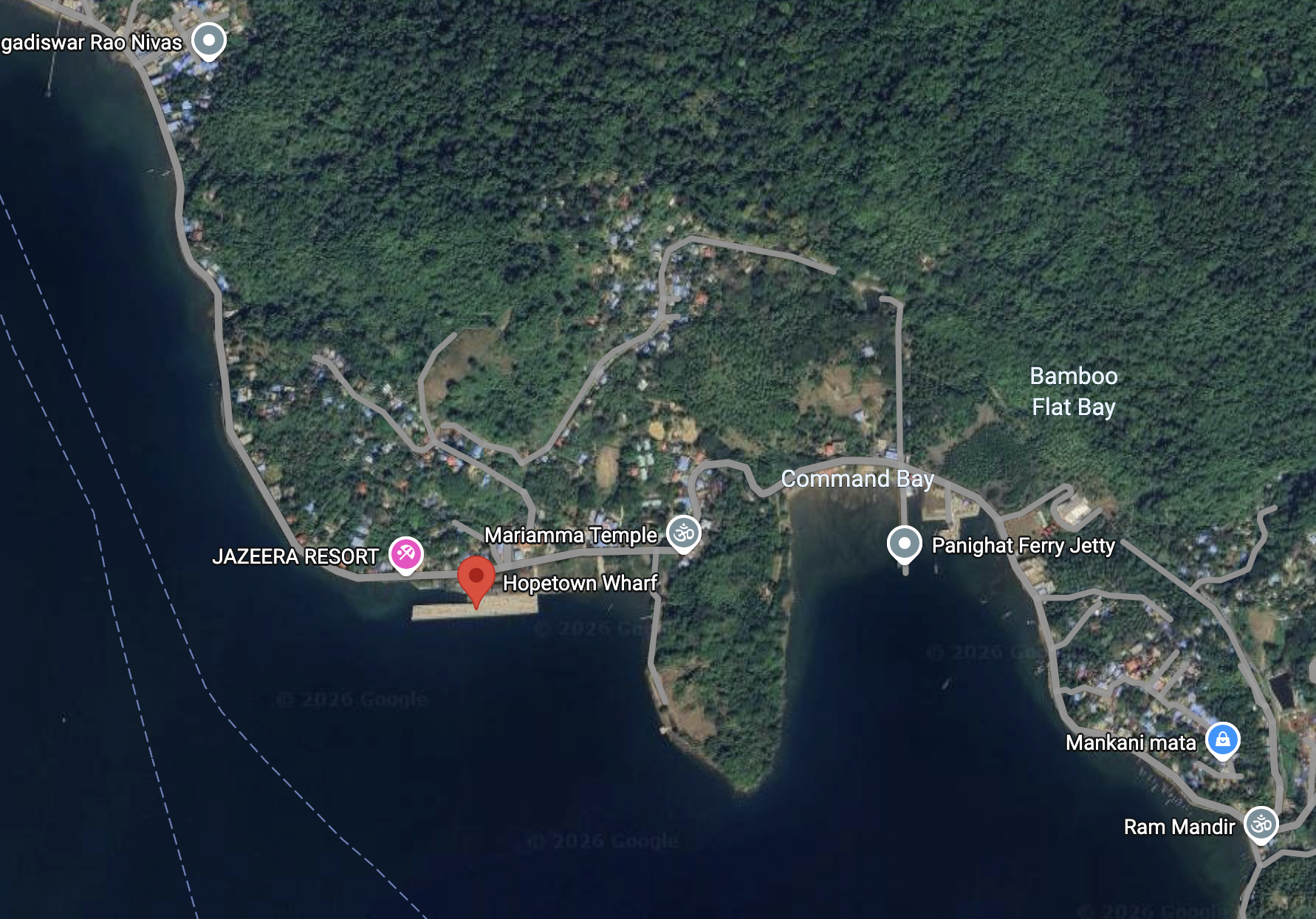
Port Blair Port operates across three wharfs, Haddo, Chatham, and Hope Town, each serving a distinct operational function.
Haddo is the main port. Vessels up to 180 meters LOA can berth here without special permission; larger vessels require prior authorization. The available draft is 9 meters, rising to 9.5 meters at high tide. Haddo is equipped with shore cranes, mobile cranes, reach stackers, and forklifts, making it the primary facility for cargo handling operations.
Chatham has a total berth length of 225 meters with a draft of 9 meters.
Hope Town has a total berth length of 200 meters with a draft of 7.5 meters. It is primarily used for gas tankers; other vessels may berth here with prior permission.
Understanding which wharf your vessel will be assigned to, and what constraints apply, is part of what a local port agent handles before your arrival.
What the Port Actually Handles
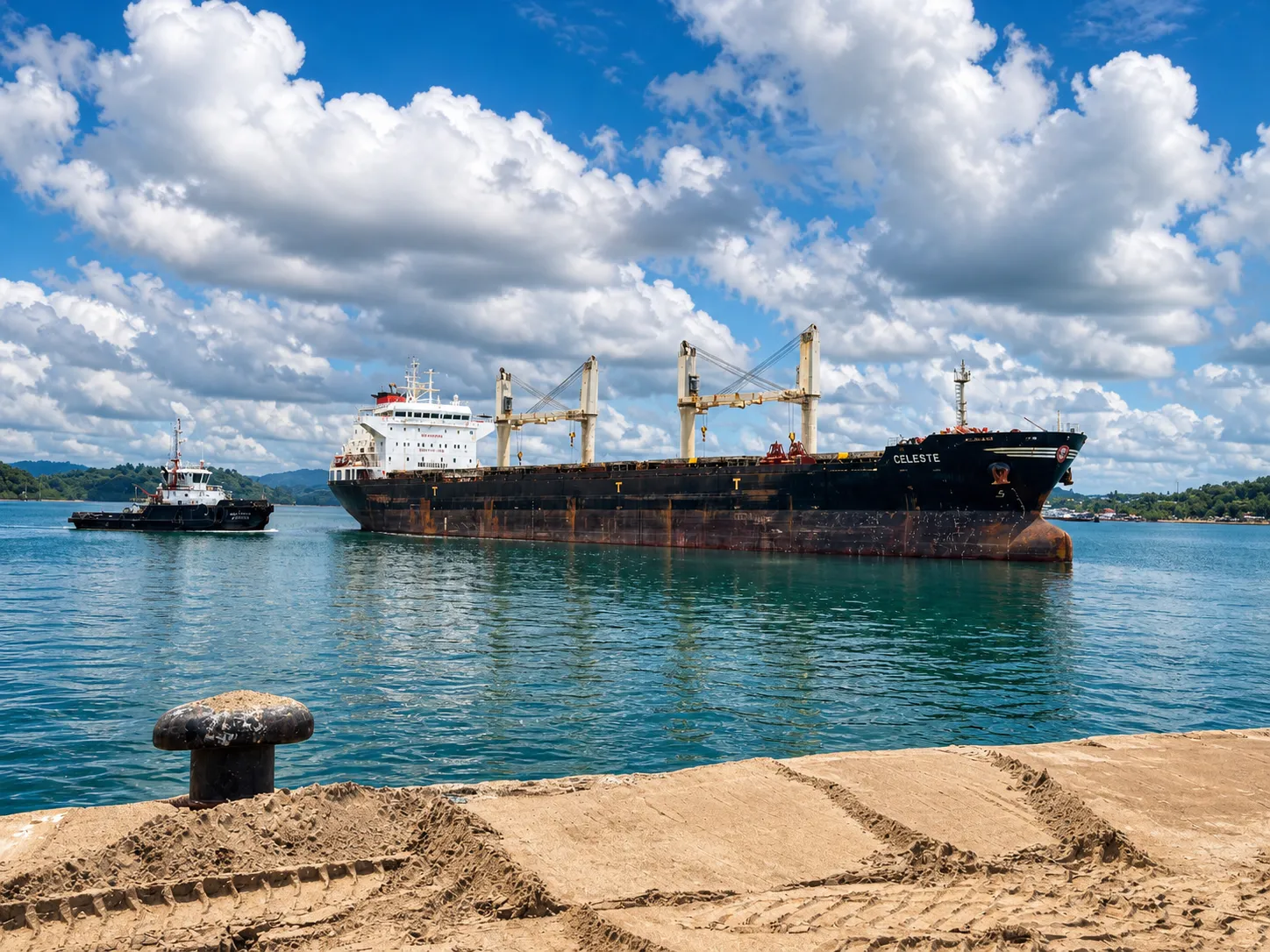
Port Blair Port is the lifeline for island supply. The Andaman and Nicobar Islands depend almost entirely on sea freight for their essential commodities, food, fuel, construction materials, machinery, medical supplies, and consumer goods. There is no alternative supply chain. Everything that cannot be flown in has to come by ship, and the overwhelming majority of cargo moves through Port Blair.
The port handles a mix of:
Cargo vessels carrying supplies from Chennai and Kolkata to keep the islands stocked.
Passenger vessels operated by the Directorate of Shipping Services (DSS), which provides essential ferry connectivity between Port Blair and outlying islands including Diglipur, Swaraj Dweep, Shaheed Dweep, Little Andaman, Car Nicobar, and Great Nicobar.
Offshore support vessels serving the growing offshore energy and research sector in Andaman waters, a segment that has drawn increasing attention following hydrocarbon discoveries in the Andaman Basin.
Naval and government vessels given Port Blair's role as the headquarters of India's only tri-service theater command, the Andaman and Nicobar Command (ANC), established in 2001.
Research and survey vessels conducting oceanographic, geological, and hydrographic surveys in one of the most data-rich and ecologically significant marine territories in the Indian Ocean.
Operating in These Waters Is Not Standard Port Operations
This is something that only becomes clear once you have worked here.
Every vessel call at Port Blair, or at any of the 23 ports across the archipelago, involves a layered clearance process. The remote geography of the islands, their protected ecological and tribal status, and the presence of a tri-service military command mean that regulatory requirements are significantly more complex than at a standard mainland Indian port.
Vessel clearances require coordination across multiple authorities. Import and logistics documentation involves navigating inter-island geography where road infrastructure is limited or nonexistent. Medical emergencies require rapid coordination with onshore hospitals and, when necessary, evacuation logistics. Crew welfare, spare parts delivery, and bunkering all need to be organized with an understanding of what is locally available and what needs to be sourced from the mainland on a schedule that does not always bend to urgency.
Experience in these waters is not a nice-to-have. It is the difference between a smooth port call and a very expensive problem.
The Strategic Picture Is Getting Bigger
What is happening around Port Blair and the Andaman and Nicobar Islands right now is significant, for India, for the region, and for maritime operators working in these waters.
The islands sit at the mouth of the Malacca Strait, one of the world's busiest shipping chokepoints. An estimated 40 percent of global trade and a third of the world's shipping traffic passes through the Malacca Strait annually. The Andaman and Nicobar Islands flank this route from the west, giving India, and by extension Port Blair, a strategic vantage point that is increasingly recognized in defense and trade policy circles.
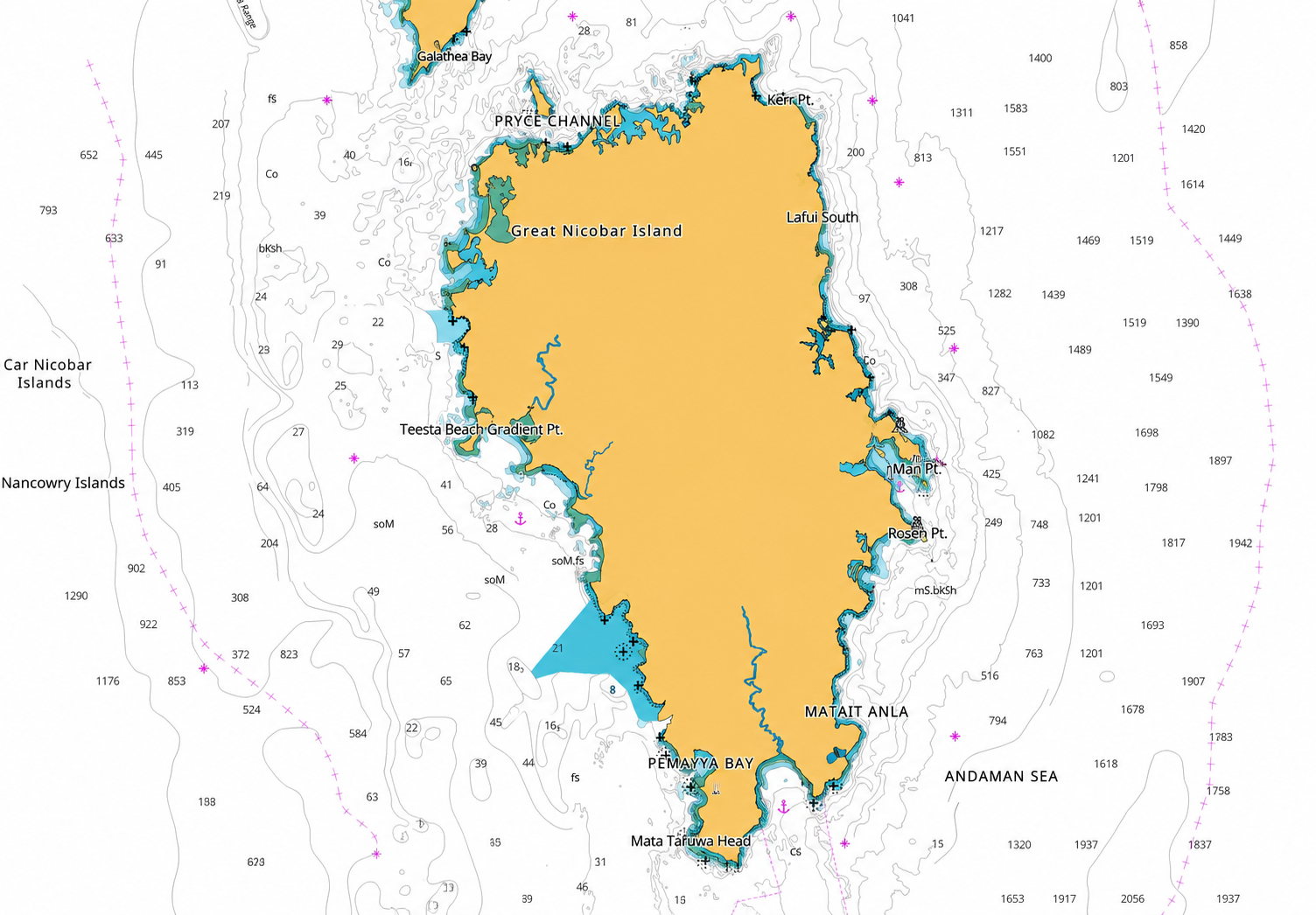
The Government of India has committed substantial investment to developing the islands' maritime infrastructure. The proposed international container transshipment port at Galathea Bay in Great Nicobar Island is the most visible expression of this strategic intent. The vision is for a port that can rival the transshipment capacity of Singapore and Hong Kong, positioned directly on the main East-West shipping lane.
Beyond the Nicobar project, the government's broader infrastructure push includes modernizing airfields, improving inter-island ferry connectivity, upgrading naval facilities at the Andaman and Nicobar Command, and building fuel storage and port infrastructure across both the northern and southern island groups to reduce dependence on Port Blair as the single operational hub.
The Andaman Basin hydrocarbon story adds another layer. Potential oil and gas discoveries in these waters have been on the radar for years, and any extraction or exploration activity will require substantial offshore support infrastructure, all of which flows through Port Blair.
For maritime service providers, what this collectively means is a sustained, multi-year expansion in vessel traffic, port activity, offshore operations, and logistical complexity across the entire archipelago.
What This Means for Vessels Calling Port Blair
If your vessel is calling Port Blair, or any port across the Andaman and Nicobar Islands, there are a few realities to plan around:
Clearance timelines. Port entry and clearance in the Andamans involves multiple regulatory bodies. Having a local port agent with established relationships across these authorities is not optional. It is how timelines get met.
Logistics complexity. Moving cargo or supplies between islands requires inter-island coordination that mainland logistics frameworks are not built for. Local knowledge and vetted local networks determine whether your cargo moves on time.
Medical and crew emergencies. The Andamans are remote. If a crew member requires hospitalization or medical evacuation, the response chain has to be fast and pre-established. Improvising during an emergency in these waters is not a workable plan.
Regulatory compliance. The protected status of many island areas, tribal territory restrictions, and the military sensitivity of certain zones mean that regulatory compliance here carries more weight than at a standard commercial port. One misstep can mean a vessel being held at anchorage far longer than planned.
The operators who call these ports smoothly are the ones who have invested in local agency relationships that actually know this operating environment, not just on paper, but in practice, across years of real calls.
Looking Ahead
Port Blair Port is at an inflection point. For decades it served primarily as a supply lifeline for a remote island territory. What is emerging now is something larger: a port at the center of one of India's most strategically consequential maritime development programs, adjacent to shipping lanes that carry the weight of global trade, and sitting above waters that may hold significant energy resources.
The infrastructure is being built to match that ambition. The regulatory and operational complexity will grow with it. And the value of genuine, experienced, on-the-ground maritime expertise in these waters will only increase.
For over two decades, Anko Marine has been operating in exactly this environment, handling vessel clearances, offshore coordination, husbandry, medical emergencies, and logistics across the Andaman and Nicobar Islands. Not from a distance. Here, in these waters, every day.
If your vessel is calling Port Blair or any port across the archipelago, we are your partner on the ground.
Anko Marine is a Port Blair-based shipping agency providing port agency services, husbandry services, offshore coordination, medical emergency support, and logistics across the Andaman and Nicobar Islands.